
Life Coach Website Design: How to Build a Site That Attracts Clients
94% of visitors judge your coaching business by your website design alone (Tenet, 2026). That means your life coach website is either your most powerful client-attraction tool or your biggest liability. With the coaching industry now valued at $5.34 billion globally (ICF, 2025), standing out starts with a website that builds trust in under 5 seconds and guides ideal clients toward booking a session.
TL;DR: Your life coach website has 0.05 seconds to make a first impression. This guide covers brand identity, mobile-first design, conversion-focused CTAs, social proof, SEO, and content strategy, backed by 12+ sourced statistics, so you can build a coaching site that consistently turns visitors into paying clients.
At Lovepixel Agency, we’ve built 500+ websites for coaches, speakers, and conscious entrepreneurs. The patterns are clear: the coaches who invest in intentional, strategy-driven design consistently outperform those using generic templates. Here’s exactly what separates a coaching website that converts from one that collects dust.

Why Does Life Coach Website Design Matter So Much?
75% of people judge a business’s credibility based on its website design (Hostinger, 2026). For life coaches, where the entire relationship is built on trust, this statistic hits even harder. Your website is often the first touchpoint a potential client has with you, and a dated or confusing design signals that your coaching might be the same.
The coaching industry has grown 62% since 2019 (Luisa Zhou, 2025). That growth means more competition. A professionally designed website isn’t a luxury anymore. It’s how potential clients decide whether to book a discovery call with you or the coach who shows up next in their search results.
Think about it this way: if 99% of people who hire a coach report being satisfied with the experience (ICF, 2025), the barrier isn’t your coaching quality. It’s getting people to take that first step. Your website’s job is to remove every friction point between “I’m curious” and “I’m ready to book.”
Life coach website design that builds credibility within those first few seconds combines clean visual hierarchy, authentic imagery, clear messaging, and a single focused path to conversion. We’ve seen this pattern across hundreds of coaching sites we’ve built at Lovepixel Agency.
How Do You Define Your Coaching Brand Identity?
48% of consumers consider website design the top factor in evaluating a business’s trustworthiness (DesignRush, 2025). Your brand identity goes beyond a logo. It’s the visual and emotional language that tells potential clients who you are before they read a single word on your page.
Start with your coaching philosophy. What do you believe about transformation? What makes your approach different? These answers should shape every design choice, from your color palette to your typography to the images you select.
A career transition coach might choose deep greens and warm golds to signal growth and ambition, while a mindfulness coach might lean into soft blues and natural textures. The key is consistency: your website, social profiles, and business cards should all speak the same visual language.
Here’s a practical starting point for building your coaching brand identity:
- Define 3-5 brand values that guide your coaching practice
- Choose a color palette of 2-3 primary colors that reflect those values
- Select fonts that balance professionalism with warmth (we often recommend pairings like Playfair Display with Open Sans)
- Create a mood board on Pinterest that captures the feeling your brand should evoke
- Write a brand statement in 1-2 sentences that captures your unique approach
If branding feels overwhelming, a branding strategy built for coaches can give you a clear foundation that makes every other design decision easier.
What Pages Does Every Life Coach Website Need?
Websites with clear navigation and logical structure see up to 400% higher conversion rates compared to confusing layouts (VWO, 2026). For a coaching website, structure isn’t just about organization. It’s about creating a guided path from “Who is this person?” to “I want to work with them.”
Every life coach website needs these core pages:
- Homepage: Your digital front door. Lead with who you help, the transformation you offer, and one clear call to action.
- About page: Share your story, credentials, and why you became a coach. This is where trust gets built through vulnerability and authenticity.
- Services page: Clearly outline your coaching packages, what’s included, and the outcomes clients can expect. See how we structure service pages for maximum clarity.
- Testimonials/Results page: 93% of consumers say online reviews impact their purchase decisions (DataPins, 2025). Give social proof its own dedicated space. Check out our results-driven design approach.
- Blog: Your SEO engine and thought leadership platform. More on this below.
- Contact/Book page: Make it ridiculously easy to reach you. One form, one booking link, zero friction.
When we design coaching websites at Lovepixel, we always map the visitor journey before writing a single line of code. The homepage answers “Is this for me?”, the about page answers “Can I trust this person?”, and the services page answers “What will I get?” Every page has one job, and every job ladders up to booking a call.
How Important Is Mobile-First Design for Coaches?
Mobile bounce rates jump to 53% when a page takes more than 3 seconds to load (Amra & Elma, 2025). With over 60% of web traffic coming from mobile devices, your coaching website must look and perform flawlessly on phones and tablets, not just desktop screens.
Mobile-first design means more than just making your site “responsive.” It means designing for the phone screen first and scaling up to desktop, not the other way around. This approach forces you to prioritize what matters most: your message, your credibility, and your call to action.
Critical mobile design priorities for your coaching site:
- Page speed: Pages loading in 1 second convert 3x more than pages loading in 5 seconds (Huckabuy, 2025)
- Tap-friendly buttons: CTA buttons should be at least 44×44 pixels for easy mobile tapping
- Readable text: Minimum 16px font size on mobile, with generous line spacing
- Compressed images: Use WebP format and lazy loading to keep pages fast
- Sticky CTA: A persistent “Book a Call” button that follows the visitor as they scroll
What Makes a Coaching Website Call-to-Action Convert?
CTA buttons designed as visual elements get 45% more clicks than text-only links (Sender, 2025). For life coaches, your CTA is the bridge between someone browsing your site and becoming a paying client. Getting it right is worth serious attention.
The most effective coaching CTAs share three qualities: they’re specific about what happens next, they communicate value rather than commitment, and they stand out visually from the rest of the page.
Here’s what works for coaching websites specifically:
- “Book Your Free Discovery Call” outperforms generic “Contact Us” because it’s specific and low-risk
- Contrasting button colors that pop against your site’s background (if your site is blue-toned, try a warm orange or coral CTA)
- Place CTAs at decision points, not just the bottom of the page. After testimonials, after explaining your methodology, after your bio
- One primary CTA per page. Emails with a single CTA increase conversions by 1,617% compared to multiple CTAs (Sender, 2025). The same principle applies to web pages.
A word on language: coaches often default to passive CTAs like “Learn More” or “Get in Touch.” Instead, use action-oriented language that paints the outcome. “Start Your Transformation” or “Schedule Your Strategy Session” tells visitors exactly what’s waiting for them on the other side.
Need help designing CTAs that actually convert? Our team at Lovepixel specializes in coaching website design that turns visitors into booked calls.
How Do Testimonials and Social Proof Impact Coaching Conversions?
Displaying reviews on your website can increase conversions by up to 270% (DataPins, 2025). For coaches, social proof is especially powerful because the service is deeply personal. Potential clients want to see that others have walked this path and experienced real transformation.
92% of consumers hesitate to buy when no customer reviews are available (DataPins, 2025). That means a coaching website without testimonials is actively losing potential clients.

Here’s how to use social proof effectively on your coaching website:
- Video testimonials convert 80% better than text-only reviews (DataPins, 2025). Even a 60-second phone recording adds more trust than a paragraph of text.
- Place 3-5 testimonials on your homepage. Research shows this is the optimal number, balancing credibility without overwhelming visitors.
- Include specific outcomes. “I got 5 new clients in my first month” is more powerful than “She’s a great coach.”
- Add testimonials near your CTAs. A glowing review right before a “Book Now” button reduces hesitation at the moment of decision.
- Create a dedicated results page with longer case studies for visitors who need more convincing. See how results-driven design works in practice.
What Content Should a Life Coach Put on Their Website?
Websites with regularly updated blog content generate 67% more leads than those without (HubSpot, 2025). For life coaches, content isn’t just about SEO rankings. It’s your chance to demonstrate expertise, build trust, and give potential clients a taste of what working with you feels like.
The best coaching website content addresses the exact questions and challenges your ideal clients are searching for. Think about what keeps them up at night, what they’re Googling at 2 AM, and what transformation they’re hoping for.
Content types that work well for coaching websites:
- Blog posts addressing common client challenges (anxiety management, career transitions, relationship patterns)
- Free resources like worksheets, quizzes, or checklists that demonstrate your methodology
- Video content where you share coaching insights (websites with video have a 4.8% conversion rate vs. 2.9% without, per VWO, 2026)
- Case studies that walk through a client’s journey from challenge to transformation
- Your coaching philosophy explained in approachable, jargon-free language
One pattern we’ve noticed across the coaching sites we’ve built: the coaches who write from genuine experience consistently outperform those who publish generic advice. A post titled “What I Learned From Coaching 200 Career Changers” will always beat “5 Tips for Career Change.” Your lived experience is your competitive advantage, so put it on the page.
For coaches who want a comprehensive SEO strategy behind their content, connecting your blog to a larger keyword plan amplifies every article you publish.
How Does SEO Help Life Coaches Get Found Online?
88% of consumers research online before making a purchase or booking a service (Convergine, 2025). For life coaches, SEO (search engine optimization) is the difference between being discoverable and being invisible. When someone searches “life coach near me” or “career coaching for women,” your website needs to show up.
SEO for coaching websites focuses on three areas:
- On-page SEO: Strategic keyword placement in your page titles, headings, meta descriptions, and body content. Your target keywords should appear naturally, not stuffed in awkwardly.
- Technical SEO: Fast load times, mobile responsiveness, clean URL structure, and proper schema markup. These signals tell search engines your site is trustworthy and user-friendly.
- Content SEO: Regular blog posts targeting the questions your ideal clients are searching for. Each article becomes a doorway that leads new visitors to your site.
Start by identifying 5-10 keywords that match your coaching niche. For a life coach focused on work-life balance, terms like “work-life balance coaching,” “stress management for professionals,” and “career burnout coach” are natural fits. Use those keywords in your page titles, headings, and throughout your content.
Building a coaching practice through search requires patience and consistency, but the payoff is substantial: organic traffic from SEO is the most sustainable, cost-effective way to attract coaching clients long-term. Learn more about marketing strategies designed for coaches.
What Visual Design Choices Build Trust With Coaching Clients?
It takes just 0.05 seconds for a visitor to form an opinion about your website (SagaPixel, 2026). In that fraction of a second, your visual design is doing all the talking. Colors, spacing, typography, and imagery create an emotional response before a single word gets read.
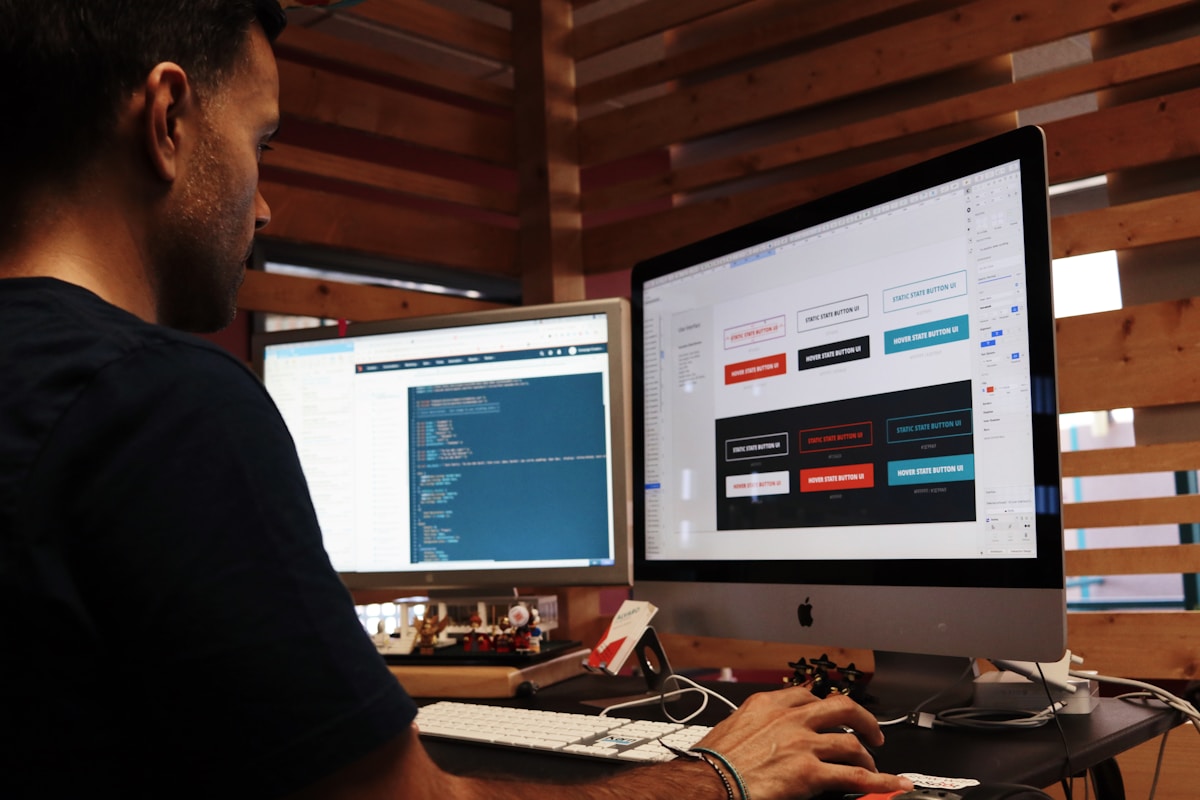
Design choices that build trust for coaching websites:
- Professional photography of you. Stock photos feel impersonal. Potential clients want to see the actual human they’ll be working with. Invest in a brand photoshoot that captures your personality in settings that reflect your coaching style.
- White space is your friend. Clean layouts with generous spacing feel calming and trustworthy. Cluttered designs feel chaotic, which is the opposite of what coaching promises.
- Consistent color palette. Choose 2-3 core colors and use them consistently across every page. Inconsistency signals a lack of attention to detail.
- Readable typography. Body text should be 16-18px minimum. Choose fonts that balance warmth with professionalism.
- Intentional imagery. Every image should reinforce your brand story. A wellness coach might use nature imagery and soft light. An executive coach might use clean, modern environments.
For design inspiration, explore our portfolio of coaching and personal brand websites we’ve built for conscious entrepreneurs.
What Platform Should You Use for Your Coaching Website?
The right platform decision saves you time, money, and frustration as your coaching business grows. There’s no single “best” platform, but some fit coaching businesses better than others depending on your technical comfort level and growth plans.
WordPress remains the most flexible option, powering over 43% of all websites. It offers total control over design, SEO, and functionality. You can integrate booking systems, email marketing, course platforms, and payment processing. The tradeoff is a steeper learning curve if you’re not technical, which is where working with a professional web design team makes the difference.
Squarespace is a solid choice for coaches who want a beautiful site up quickly with less technical overhead. The templates are design-forward and mobile-responsive out of the box. SEO capabilities are more limited than WordPress, but adequate for most local or niche coaching practices.
Showit has become popular with coaches and personal brands for its visual design flexibility and ability to run a WordPress blog underneath. It gives you the best of both worlds, though it comes with a monthly subscription fee.
Our recommendation for most serious coaching businesses: WordPress with a professional theme and a maintenance plan. It gives you the foundation to grow without hitting platform limitations. Talk to our team about which platform fits your practice best.
How Do You Launch and Promote Your Coaching Website?
88% of web users won’t return after a poor experience (Tenet, 2026). That’s why your launch needs to be strategic, not rushed. Testing thoroughly before going live protects you from losing potential clients to broken links, slow pages, or confusing navigation.
Before launch, run through this checklist:
- Test on multiple devices: Check your site on at least 3 different screen sizes (phone, tablet, desktop)
- Check page speed: Run your site through Google PageSpeed Insights, aiming for 90+ scores
- Test all forms and links: Every button, every link, every booking widget
- Proofread everything: Typos on a coaching website undermine the professionalism you’re trying to establish
- Set up analytics: Google Analytics and Search Console give you visibility into how visitors interact with your site
After launch, promote across every channel:
- Email your existing network with a personal note about your new site
- Share on social media with behind-the-scenes content about the design process
- Update your Google Business Profile with your new website URL
- Ask past clients to visit and leave a testimonial
- Publish your first 3-5 blog posts within the first two weeks to signal activity to search engines
A website launch isn’t a finish line. It’s the starting point of an ongoing relationship with your audience. Consistent updates, fresh content, and ongoing optimization are what turn a good coaching website into a client-attraction engine.
Frequently Asked Questions
How much does a life coach website cost?
A professional life coach website typically costs between $2,000 and $10,000 depending on complexity, custom design, and integrations like booking systems or course platforms. DIY options using Squarespace or WordPress templates can start under $500, but often lack the strategic conversion focus that professional design provides. 75% of users judge credibility by design (Hostinger, 2026), making this one of the highest-ROI investments for your coaching practice.
What are the most important features of a life coaching website?
The five essential features are: a clear value proposition above the fold, prominent booking CTA, client testimonials (video testimonials convert 80% better than text, per DataPins, 2025), mobile-responsive design, and a blog for SEO. Beyond those, integrations with scheduling tools like Calendly and email marketing platforms help automate client acquisition.
How can I make my coaching website stand out from competitors?
With 122,974 coach practitioners worldwide (ICF, 2025), differentiation starts with authentic branding. Use professional photos of yourself (not stock images), share specific client transformation stories, clearly articulate your unique methodology, and create content that demonstrates your expertise. Your personality and approach are your competitive advantage, so let them show up in your design.
Do I need a blog on my life coach website?
Yes. Coaching websites with active blogs generate significantly more organic traffic and leads. Blog content serves double duty: it builds your authority with potential clients who are reading your advice, and it signals to Google that your site is active and relevant. Even publishing 2-4 posts per month can meaningfully improve your search visibility within 3-6 months.
Why is page speed important for a coaching website?
Every second of delay in page load time causes an average 12% drop in conversion rate (Amra & Elma, 2025). For coaching websites, where the desired action is booking a discovery call, slow load times directly translate to fewer booked sessions. Pages that load in under 2 seconds maintain bounce rates below 11%, while pages taking 5+ seconds lose 38% of visitors before they see a single word.