Why Your Website Isn’t Converting
The average website converts just 2.35% of visitors (Contentsquare, 2026). That means for every 100 people who land on your site, roughly 98 leave without taking action. If you’re a coach, consultant, or conscious entrepreneur pouring energy into your online presence, those numbers should stop you in your tracks. Something on your site is silently turning people away, and it’s almost always fixable.
TL;DR: Most websites lose visitors due to slow load times, unclear messaging, weak calls to action, poor mobile experience, and missing trust signals. With 92% of consumers hesitating to buy without reviews (WiserReview, 2026), even small fixes to these five areas can dramatically improve your conversion rate.
At Lovepixel Agency, we’ve built over 500 websites for coaches, healers, and conscious entrepreneurs. The patterns we see are remarkably consistent. Talented people with real transformations to offer are losing potential clients to the same handful of website problems. Here’s what’s actually going wrong, and how to fix it.
What Is a Good Website Conversion Rate?
The global average sits at 2.35% across all industries, but the top 10% of websites convert at 11.5% or higher (WordStream, 2026). That gap tells you something important: most websites are dramatically underperforming. For coaching and service-based businesses, a healthy conversion rate falls between 3% and 5%, depending on how you define “conversion” (booking a call, joining an email list, or purchasing a product).
B2B websites average 1.8% while B2C sites hover around 2.1-2.5%. If you’re a coach or consultant, you likely fall somewhere in between, since you’re selling a personal service but often to other professionals. The point isn’t to obsess over a specific number. It’s to understand whether your site is doing its job or quietly leaking opportunity.

Is Slow Page Speed Killing Your Conversions?
A one-second delay in page load time causes a 7% drop in conversions (Tooltester, 2026). For a site generating even modest revenue, that single second adds up fast. When load times hit three seconds, bounce rates increase by 32%. Push past five seconds and 90% more visitors leave compared to a one-second load (WP Rocket, 2026).
The industry benchmark for load time is 2 seconds, yet the average page loads in 2.5 seconds on desktop and a much slower 8.6 seconds on mobile. That mobile number is especially alarming when you consider that most of your traffic is probably coming from phones.
In our experience building sites for coaches and course creators, the most common speed killers are oversized images, too many plugins, and cheap shared hosting. One client came to us with a 12-second load time. After optimizing images, cleaning up unused plugins, and moving to proper hosting, we brought it under 2 seconds. Their bounce rate dropped by nearly 40%.
Quick Speed Fixes
- Compress images to WebP format (saves 25-50% file size)
- Remove unused plugins and scripts
- Use a caching plugin (WP Rocket, LiteSpeed Cache)
- Upgrade to quality hosting with a CDN
- Lazy-load images below the fold
Is Your Messaging Clear Enough?
Visitors decide whether to stay or leave within 5 seconds of landing on your site (321 Web Marketing, 2025). If they can’t immediately understand what you do, who you help, and how to take the next step, they’re gone. This is the single most common conversion killer we see, especially among coaches and healers who have deep, nuanced offerings that are hard to distill into a headline.
The temptation is to lead with something poetic or abstract. “Transform your life through aligned abundance.” That might resonate with someone who already knows you, but a first-time visitor has no idea what that means. Your homepage headline needs to answer three questions instantly: What do you offer? Who is it for? What result can they expect?
We’ve seen coaches go from a 0.8% conversion rate to over 4% just by rewriting their above-the-fold messaging. No redesign, no new features. Just clarity. When we work on funnel design at Lovepixel, the messaging hierarchy is always the first thing we address, because it influences everything else on the page.

Messaging Checklist
- Can a stranger understand your offer in 5 seconds?
- Does your headline name the transformation, not just the service?
- Is your subheadline specific about who you help?
- Does your above-the-fold section include a clear next step?
Are Your Calls to Action Actually Working?
Personalized CTAs convert 202% better than generic ones (HubSpot, 2025). Yet most websites still rely on vague buttons that say “Learn More” or “Submit.” Your call to action is the bridge between interest and action, and if it’s weak, unclear, or buried, you’re losing people who were ready to say yes.
CTAs placed above the fold get 304% more engagement than those hidden further down the page. Websites with prominent, contrasting CTA buttons convert at 17.85% compared to 11.48% for sites with less visible buttons (WiserNotify, 2026). These aren’t minor differences. Your button text, color, placement, and frequency all matter.
For coaches and service providers, the best-performing CTAs speak to what happens next in human terms. “Book Your Free Strategy Call” outperforms “Contact Us” every time. “Download Your Brand Blueprint” beats “Sign Up.” The more specific and value-driven the language, the more clicks you’ll get.
Is Your Website Failing on Mobile?
Mobile devices drive 63% of all web traffic, yet mobile conversion rates sit at just 2.2% compared to 4.3% on desktop (Blend Commerce, 2026). That’s nearly half the conversion rate, despite mobile visitors making up the majority. Cart abandonment on mobile reaches 84.8% versus 74.3% on desktop, and the average checkout or form-completion process takes 40% longer on a phone.
81% of websites still perform poorly on mobile UX (Loopex Digital, 2026). That’s a staggering number, and it means most businesses are losing their largest audience segment to friction that’s entirely preventable. Buttons too small to tap, text too small to read, forms that feel painful on a small screen.
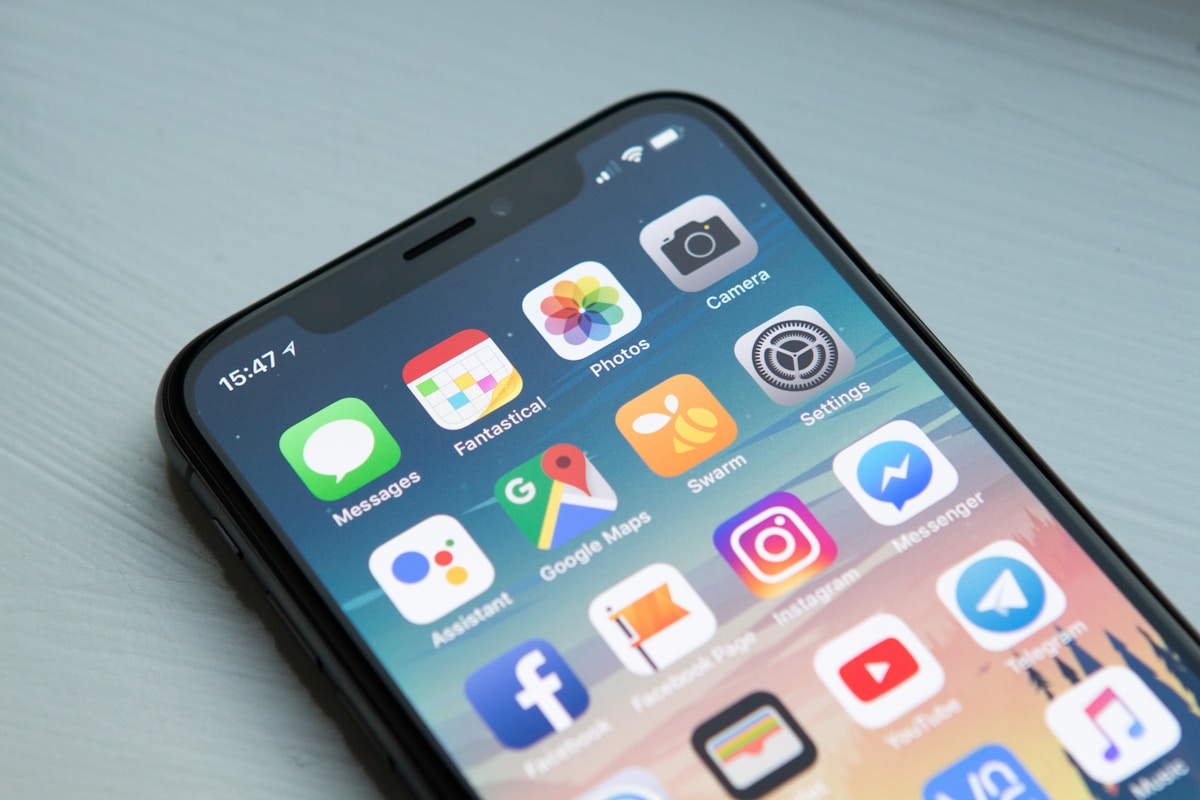
Here’s something most agencies won’t tell you: responsive design alone isn’t enough. A site that technically fits a phone screen but doesn’t rethink the user journey for mobile will still underperform. When we build websites for coaches, we design mobile-first, which means the phone experience drives the layout decisions, not the other way around. The desktop version expands from there.
Mobile Optimization Priorities
- Test every page on an actual phone, not just a browser preview
- Make CTA buttons thumb-friendly (minimum 48×48 pixels)
- Simplify forms to the fewest possible fields
- Ensure text is readable without zooming (16px minimum)
- Reduce the steps between landing and converting
Are You Missing Trust Signals?
92% of consumers hesitate to purchase when no customer reviews are available (WiserReview, 2026). Displaying reviews can increase conversions by up to 270%, and pages featuring testimonials convert 34% better than those without (Genesys Growth, 2026). Trust isn’t optional. It’s the foundation of conversion.
For coaches and conscious entrepreneurs, trust signals go beyond star ratings. Your potential clients are making a deeply personal decision. They want to know you’re credible, that others have had real results, and that working with you feels safe. Video testimonials increase conversion rates by 80%, and 89% of consumers trust verified video reviews over written ones.
Think about what a first-time visitor sees on your site. Do they see proof that you’ve helped people like them? Or do they see a polished page with no evidence that real humans have worked with you and been transformed? Even if you’re just starting out, you can build trust through case study snippets, client logos, certifications, media mentions, or a compelling “about” story that shows your own journey.
Is Poor Content Driving Visitors Away?
38% of people stop engaging with a website if the content or layout is unattractive (Loopex Digital, 2026). Large blocks of text, walls of information without visual breaks, and content that talks about you instead of your visitor’s problems all contribute to high bounce rates. Your content needs to speak directly to the person reading it, addressing their pain points before pitching your solution.
The best-converting websites use a simple content hierarchy: lead with the problem, present the solution, prove it works, then make the ask. Every section should earn the reader’s attention for the next one. If a visitor feels overwhelmed, confused, or talked at rather than with, they’ll leave.
When we audit websites at Lovepixel, content structure is one of the first things we evaluate. We often find coaches who have genuinely valuable insights buried in long paragraphs that nobody reads. Reformatting the same content with clear headings, short paragraphs, bullet points, and visual breathing room can shift a page’s performance without writing a single new word. Our conversion rate optimization services often start with exactly this kind of content restructuring.

Are You Attracting the Wrong Traffic?
Organic search and email traffic convert at 2.5-3%, while social media traffic typically converts under 1% (Contentsquare, 2026). Not all visitors are created equal. If your website traffic is growing but conversions aren’t following, the issue might not be your site at all. It might be who’s landing on it.
This happens frequently when coaches invest in broad social media marketing or run ads targeting general interest audiences rather than people with buying intent. Someone who clicks a viral Instagram post is in a very different mindset than someone who searches “life coaching services near me.” Both count as traffic, but only one is likely ready to convert.
The fix is aligning your traffic sources with your conversion goals. SEO and content strategy consistently outperform social for conversion because search visitors are actively looking for what you offer. Email performs even better because those subscribers already know and trust you. Focus your energy on traffic channels that deliver visitors who are predisposed to take action.
How Do You Fix a Website That Isn’t Converting?
The top 10% of websites convert at 11.5% or higher, nearly 5x the average (WordStream, 2026). Closing that gap doesn’t require a full rebuild. It requires a systematic approach: identify your biggest leak, fix it, measure the impact, then move to the next one.
Start with data. Install heatmap and session recording tools (Hotjar, Microsoft Clarity) to see exactly where visitors drop off. Look at your Google Analytics for pages with high traffic but low conversions. Those are your highest-impact opportunities.
Then prioritize. Here’s a practical order based on typical ROI:
- Speed: Get your load time under 2 seconds. This is non-negotiable.
- Messaging: Rewrite your above-the-fold headline and subheadline for clarity.
- CTAs: Make your primary call to action visible, specific, and repeated throughout the page.
- Trust: Add testimonials, case studies, or client logos above the fold.
- Mobile: Test and optimize the full mobile experience.
- Content: Break up long text, add visuals, and restructure for scanability.
Each of these improvements compounds. A site that’s 1 second faster, with clearer messaging, stronger CTAs, and visible social proof will perform dramatically differently than one with just one of those fixes. At Lovepixel, we’ve seen clients double their conversion rates by addressing three or four of these areas in a single sprint.

Frequently Asked Questions
What is the most common reason websites don’t convert?
Unclear messaging is the most common conversion killer. Research shows visitors decide whether to stay within 5 seconds (321 Web Marketing, 2025). If your headline doesn’t immediately communicate what you do, who you help, and what result you deliver, visitors leave before they ever see the rest of your site.
How fast should my website load to avoid losing visitors?
Your site should load in under 2 seconds. A one-second delay causes a 7% drop in conversions, and bounce rates jump 32% at 3 seconds (Tooltester, 2026). The average mobile load time is 8.6 seconds, which means most mobile sites are losing the majority of their visitors before the page even finishes loading.
Do testimonials really make a difference in conversions?
Yes. Pages with testimonials convert 34% better than those without, and displaying reviews can increase conversions by up to 270% (Genesys Growth, 2026). Video testimonials are even more powerful, increasing conversion rates by 80%. For coaches and service providers, social proof is often the deciding factor for potential clients.
How many calls to action should a page have?
Every page should have one primary CTA repeated at natural decision points, typically above the fold, mid-page, and at the bottom. Personalized CTAs convert 202% better than generic ones (HubSpot, 2025). Avoid competing CTAs that ask visitors to do multiple different things on the same page.
Should I redesign my entire website to improve conversions?
Usually not. The top-performing websites focus on iterative improvements rather than complete overhauls. Start with your highest-traffic pages and apply targeted fixes: sharpen messaging, speed up load times, strengthen CTAs, and add trust signals. These changes often produce measurable results within weeks, not months. If your landing pages are fundamentally misaligned with your audience, though, a strategic redesign may be the right call.